Christian education
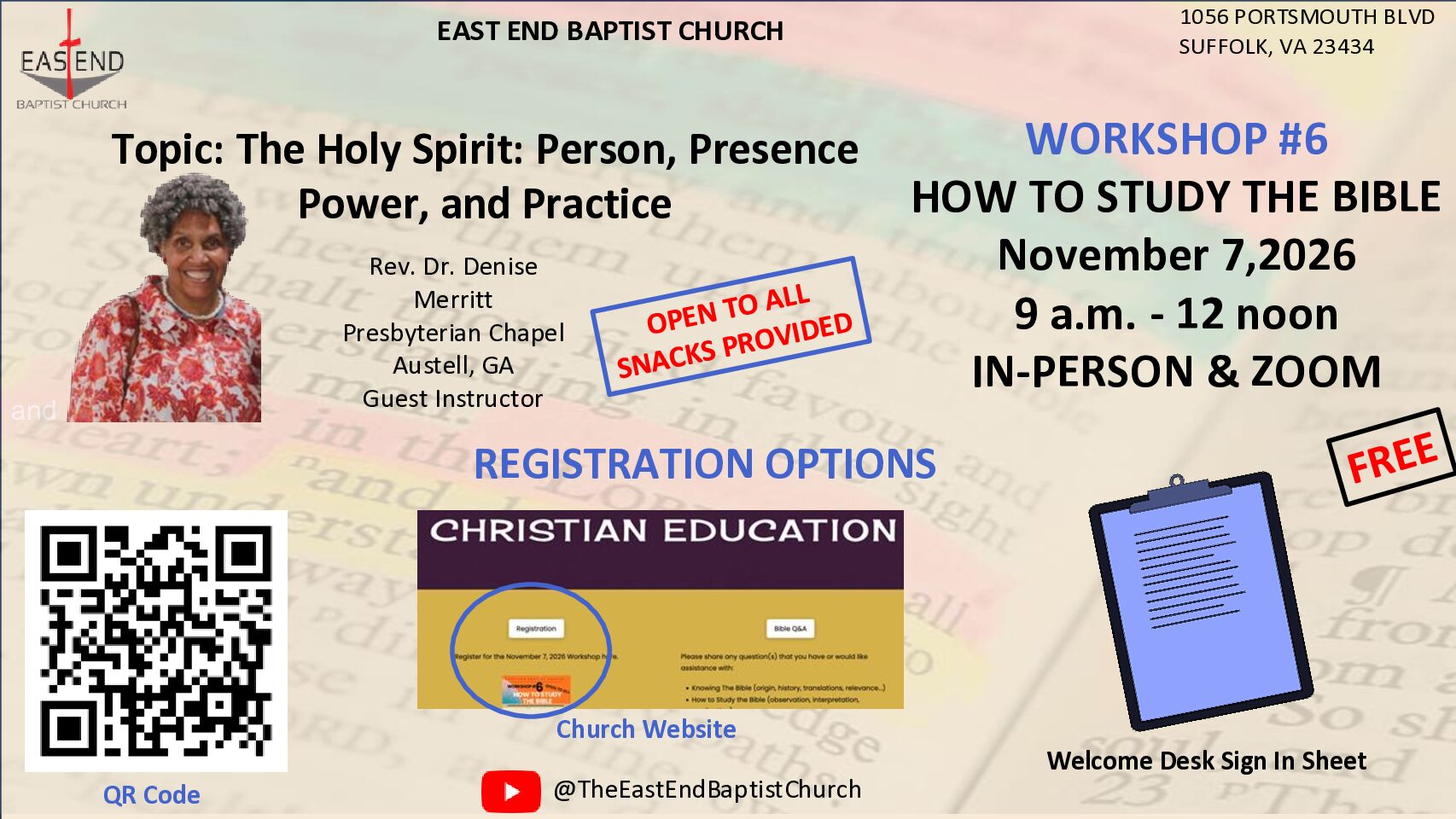
Please share any question(s) that you have or would like assistance with:
- Knowing The Bible (origin, history, translations, relevance...)
- How to Study the Bible (observation, interpretation, application)
- Understanding Difficult Passages
- Finding Good Biblical Resources on a Topic
MISSION STATEMENT
Spiritually nurture and develop each Bible student (adult, youth, and children) into a mature Christian who has a living relationship with God and is equipped to make disciples for Jesus Christ.
(Matthew 28:19)
EQUIP
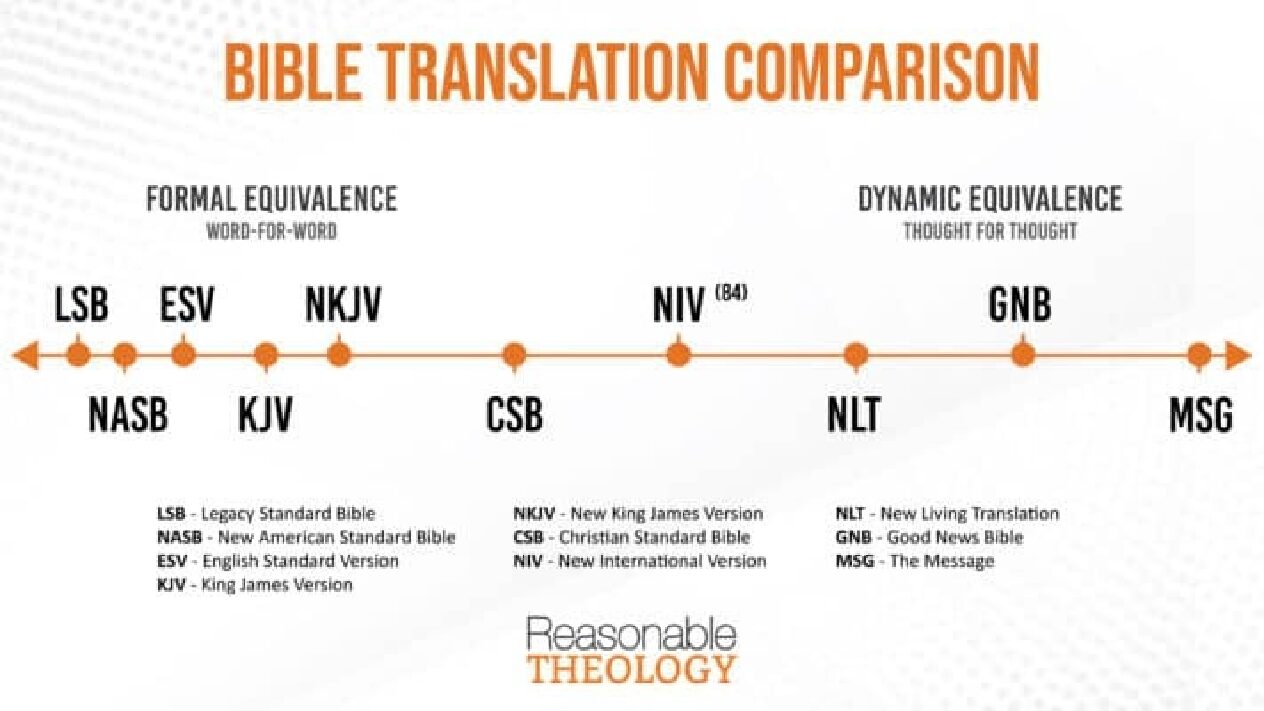
Bible Translations: Which Version Are You Reading?
Translations refer to a version of the Bible. They are generally categorized as word for word, thought for thought or paraphrase. Word for word translations, also known as formal equivalence, are considered the closest to the original language and the most accurate, but they can be more difficult to read.
Translation Spotlight: The Legacy Standard Bible (LSB)
- Released in late 2021
- Direct update of the New American Standard Bible (NASB)
- Goal: to be as literal as possible
Strength: precise wording and grammar
Weakness: not as smooth and free-flowing in reading
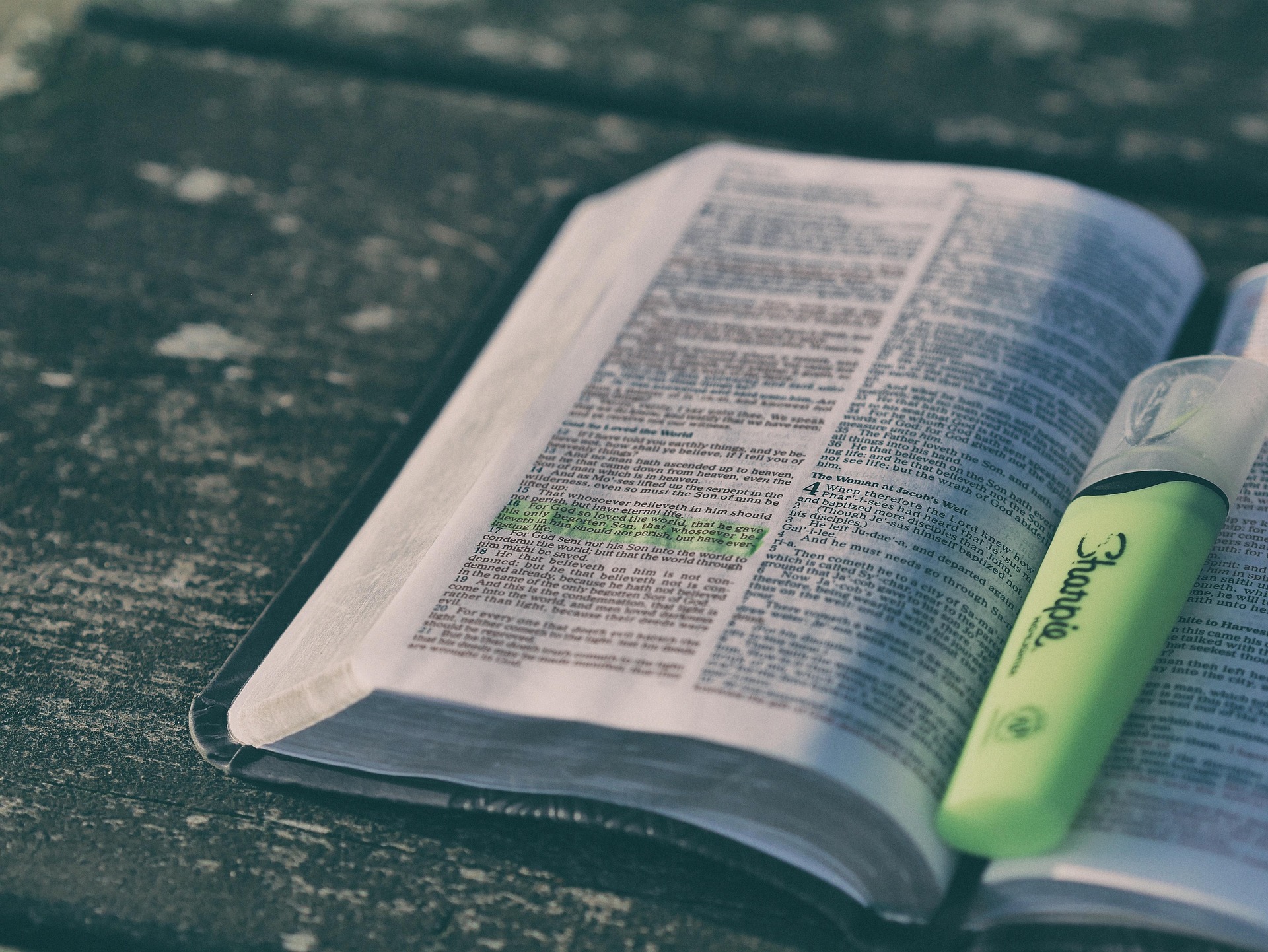
Sample: John 3:16
(LSB)
“For God so loved the world, that He gave His only begotten Son, that whoever believes in Him shall not perish, but have eternal life.”
(NLT)
“For this is how God loved the world: He gave his one and only Son, so that everyone who believes in him will not perish but have eternal life.
(The Message)
“This is how much God loved the world: He gave his Son, his one and only Son. And this is why: so that no one need be destroyed; by believing in him, anyone can have a whole and lasting life.
(https://www.gotquestions.org/Legacy-Standard-Bible-LSB.html)
Next Time: Thought-for-Thought Translations
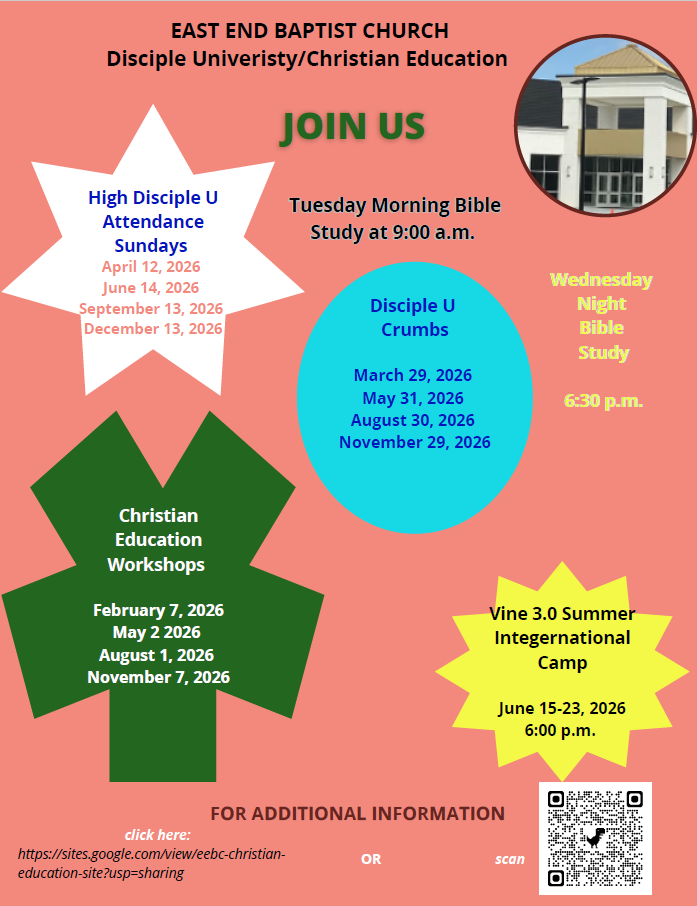
ANNOUNCEMENTS AND UPCOMING EVENTS
CHECK OUT THESE EEBC RESOURCES!
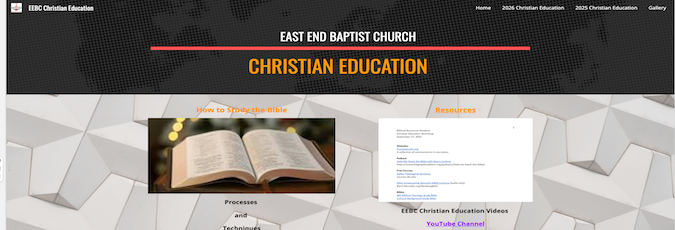
OPPORTUNITIES FOR BIBLE STUDY AT EAST END BAPTIST CHURCH
Sunday: Disciple University (9:00 A. M.)

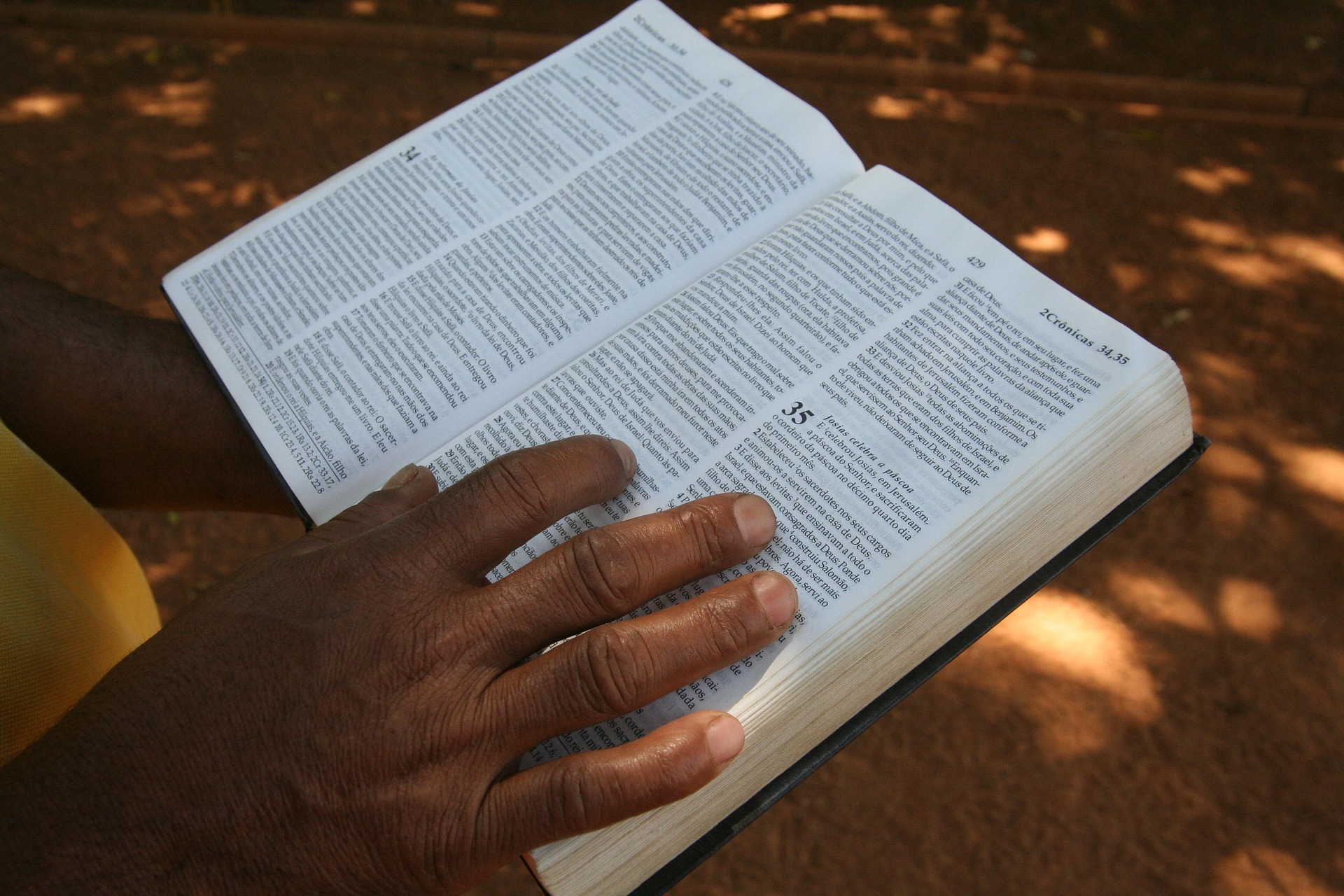
Youth Class (In-Person)
Rooms 111-112
Midweek Bible Studies
Tuesday (9:00 A. M.)
Online only
ID:847-7390-2396
Passcode: 757799
Wednesday (6:30 P.M.)
Adult Class
In-Person &
Livestreamed
Friday Noon
Teleconference
Noon Day Prayer & Bible Study
Call: 725-735-9860